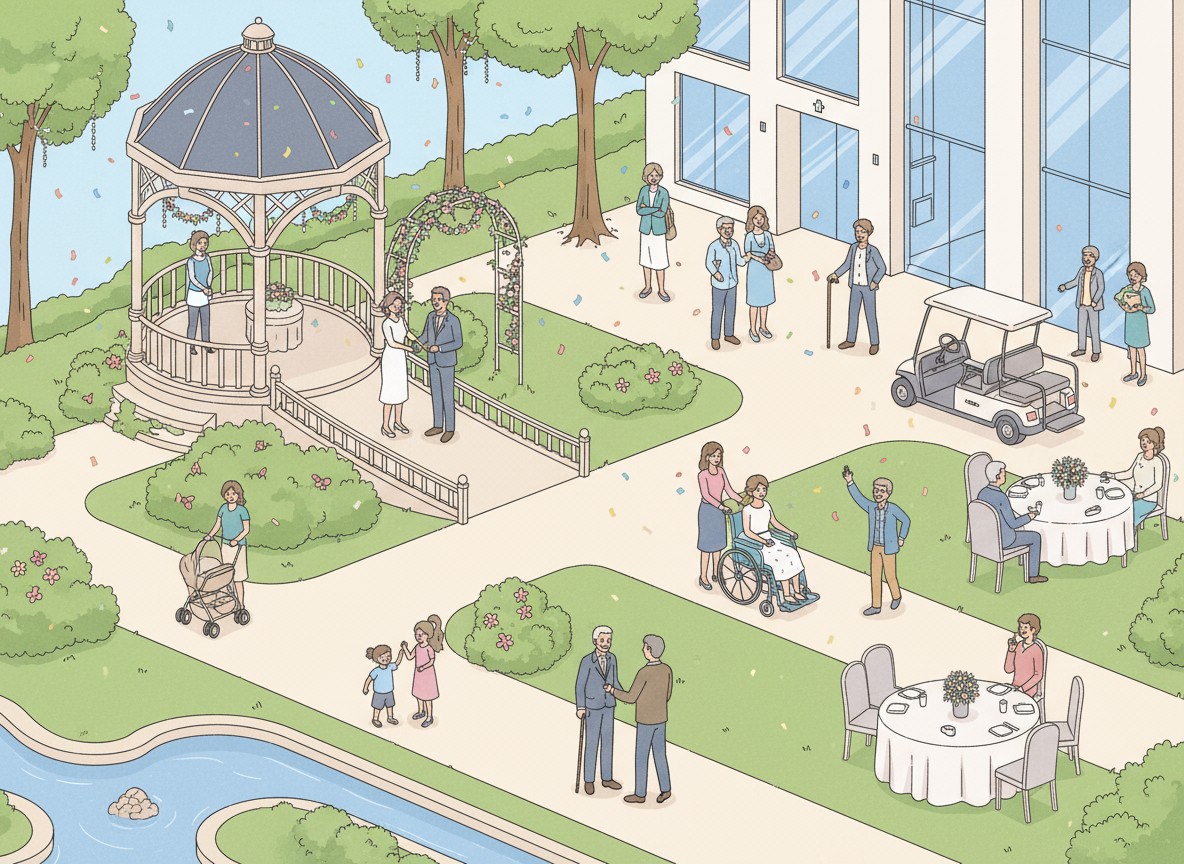
The venue tour looks perfect until you realize the “accessible” entrance leads to a ceremony space down three steps with no alternative route. The bathrooms have wide doors but stalls too narrow for wheelchairs. The reception hall’s accessible entrance is around back through the service area, forcing wheelchair users to enter through the kitchen while everyone else uses the elegant front entrance. The outdoor ceremony site has a ramp but sits on grass too soft for wheelchairs to navigate. These scenarios repeat constantly at venues marketing themselves as wheelchair accessible while providing only superficial accommodations that fail to create genuine access.
Over 40 million Americans have mobility disabilities, including wheelchair users, people using walkers or canes, individuals with limited mobility from injuries or chronic conditions, and elderly guests with reduced physical capability. Despite this enormous population, the wedding industry rarely addresses accessibility comprehensively. Venue websites might mention “wheelchair accessible” in their amenities list without explaining what that actually means. Wedding planners often lack training in accessibility assessment. Couples planning weddings—whether they themselves use wheelchairs or have guests with mobility needs—struggle to find resources addressing real accessibility requirements rather than just checking a compliance box.
This guide examines wheelchair accessibility from comprehensive, practical perspectives. You’ll learn exactly what to assess during venue tours, questions to ask that reveal true accessibility versus superficial compliance, how to evaluate outdoor venues where accessibility is more complex, considerations for photography and ceremony logistics, ways to accommodate guests with various mobility needs, and strategies for working with venues that are partially accessible but not perfect. The information comes from wheelchair users who’ve planned their own weddings, disability advocates, accessibility consultants, and couples who’ve successfully navigated these challenges. Genuine accessibility requires far more than a ramp—it demands thoughtful evaluation of every aspect of your celebration from arrival to departure.
The Comprehensive Accessibility Checklist
True accessibility assessment requires evaluating every space and transition point guests encounter from arrival through departure. Begin with parking—does the venue provide designated accessible parking spaces close to entrances with sufficient space for van-accessible vehicles? Standard accessible parking requires 8-foot-wide spaces with 5-foot access aisles; van-accessible spaces need 11 feet total width. These spaces must connect to accessible routes leading to building entrances without requiring wheelchair users to cross traffic lanes or navigate through regular parking areas.
Entrances represent the first major accessibility test. The primary entrance—not a back service entrance or side door—must be wheelchair accessible with properly sloped ramps (maximum 1:12 ratio, meaning 1 inch of rise per 12 inches of length) or level access. Doorways need minimum 32-inch clear width when open, and heavy doors should have automatic openers. Venues with beautiful historic buildings often fail here—grand staircases leading to main entrances with only a rear service ramp forcing wheelchair users to enter through loading docks or kitchen areas. This separate-but-not-equal access immediately signals that wheelchair users aren’t truly welcome as guests.
Interior navigation requires continuous accessible routes between all functional spaces. Can wheelchair users move independently from ceremony space to cocktail area to reception hall to restrooms without encountering steps, narrow doorways, or other barriers? Many venues have accessible main floors but ceremony or reception spaces up or down a few steps with no elevator access. Others have elevators so small that wheelchairs barely fit, creating uncomfortable squeezes. Measure all doorways, hallways, and passages—minimum 36-inch width for hallways, 32-inch clear width for doorways, and adequate turning space in rooms.
Questions to Ask Every Venue
“Can you show me the accessible route from parking to all event spaces including restrooms?” This reveals whether accessible routes actually exist versus just having a ramp somewhere. Watch for stairs, narrow passages, or heavy doors along the route.
“Do wheelchair users enter through the same entrance as other guests?” Separate entrances indicate inadequate accessibility and create dignitary issues.
“Can wheelchair users access the ceremony altar/stage area if needed?” Important if you or someone in your wedding party uses a wheelchair.
“What is your experience accommodating wheelchair users at weddings?” Experienced venues proactively address accessibility; inexperienced ones treat it as an inconvenient special request.
Restroom Accessibility: The Non-Negotiable Requirement
Accessible restrooms represent absolute non-negotiable accessibility requirements. Without proper restroom access, wheelchair users cannot attend your event for any significant duration. Yet restroom accessibility is frequently inadequate even at venues claiming full accessibility. Wide entrance doors aren’t enough—stalls must have minimum dimensions (60 inches deep by 56-59 inches wide for wall-hung toilets), grab bars positioned correctly, and doors that swing outward or slide to not block the limited space inside. Many venues have one “accessible” stall that’s actually too narrow, has poorly positioned grab bars, or contains toilets mounted at incorrect heights.
Single-user restrooms often provide better accessibility than multi-stall facilities since they offer more space and privacy. However, verify these restrooms are genuinely accessible—some single-user bathrooms are too small for wheelchair turning radius (minimum 60-inch diameter required), have narrow doors, or place sinks and supplies beyond reach. Ask venues about restroom dimensions and whether they meet ADA standards. Better yet, tour with measuring tape and verify specifications yourself if you or essential guests use wheelchairs.
Restroom location matters as much as design. Accessible restrooms should be along accessible routes near ceremony and reception spaces, not isolated in distant corners requiring long journeys through back hallways. Some venues have accessible restrooms only on different floors from event spaces, requiring elevator trips for basic needs. This creates both practical and dignity problems, forcing wheelchair users to leave celebrations repeatedly for lengthy restroom journeys while other guests use conveniently located facilities.
Ceremony Space Considerations
Ceremony seating requires thoughtful planning for wheelchair users and guests with mobility aids. Simply removing a few chairs creates gaps in seating rows that look empty and make wheelchair users feel conspicuous. Better approaches include designating specific accessible seating areas at aisle ends in multiple rows, ensuring wheelchair users can sit throughout the seating area rather than being segregated to back rows or side sections. These spots should have companion seating adjacent so wheelchair users can sit with their families or friends rather than being isolated.
If you or someone in your wedding party uses a wheelchair, ensure the altar, stage, or ceremony focal point is accessible. Many ceremony spaces feature raised platforms accessed only by steps, making it impossible for wheelchair users to participate as officiant, couple, or wedding party member. Ask venues about alternatives—portable ramps, level ceremony areas, or ability to reconfigure spaces to eliminate height differences. Some couples choose to perform ceremonies entirely on main floor levels rather than elevated stages, benefiting everyone while ensuring full participation.
Consider sightlines carefully when placing wheelchair users in ceremony seating. Wheelchairs position people lower than standard chairs, making it harder to see over people in front. Accessible seating should provide clear views of ceremony activities without requiring wheelchair users to strain or constantly adjust position. Front-row seating, aisle locations, or slightly elevated accessible platforms (with accessible access routes, of course) can solve sightline problems. Never assume wheelchair users are fine with obstructed views other guests wouldn’t tolerate.
Aisle Navigation and Processionals
Wedding processionals must accommodate wheelchair users who are part of the wedding party. Aisles need sufficient width (minimum 36 inches, preferably 48 inches) for comfortable wheelchair navigation. Carpeted aisles slow wheelchairs significantly—thin, tight-weave carpets work better than plush or deep-pile options. Some couples use aisle runners, but ensure they’re secured properly without creating wrinkles or edges that catch wheelchair wheels. Outdoor grass aisles present major challenges discussed in the outdoor venue section below.
If a wedding party member uses a wheelchair, coordinate processional logistics carefully. Will they wheel themselves down the aisle independently, be pushed by another wedding party member, or have a family member assist? Each approach creates different dynamics and timing considerations. Some wheelchair users prefer independent navigation as a statement of autonomy and capability. Others welcome assistance, particularly if the surface is challenging. Discuss preferences directly with the person rather than making assumptions about what they want or need.
Reception Space Accessibility
Reception layouts must accommodate wheelchair navigation between tables, buffets, bars, and dance floors. Standard banquet table spacing often creates narrow passages making wheelchair movement difficult or impossible. Allow minimum 42-inch clearances between tables, preferably 48-60 inches for comfortable navigation without requiring precise maneuvering. Corner routes where two passage areas meet need 60-inch turning radius. Work with venue coordinators and caterers to create layouts explicitly accounting for wheelchair access, not just maximizing guest count.
Table assignments for wheelchair users require consideration beyond just removing chairs. Standard banquet tables sit 30 inches high, which works for most wheelchair users. However, some wheelchairs position users lower or higher, creating awkward table heights. Ask guests using wheelchairs about their seating preferences—some prefer to remain in wheelchairs throughout meals while others transfer to standard chairs if possible. Ensure adequate space at tables for wheelchair positioning without blocking paths or cramming against walls. Each wheelchair needs roughly 30 inches of width plus clearance for approaching and positioning.
Dance floors present another accessibility consideration. While wheelchair users can certainly dance in wheelchairs, traditional crowded dance floors with people standing close together make wheelchair navigation challenging. Some couples designate slightly more space around their dance floor or communicate explicitly that the dance floor accommodates everyone including wheelchair users. Simply acknowledging wheelchair users’ presence and right to full dance floor access—rather than treating it as surprising or special—creates more inclusive environments.
Real Story: Wheelchair User Plans Her Dream Wedding
Jessica, a wheelchair user since a car accident in her twenties, toured 12 venues before finding one offering genuine accessibility. Most venues claimed accessibility but had fundamental barriers—beautiful gardens with gravel paths, historic buildings with ceremonial staircases, modern spaces with “accessible” restrooms too narrow for her wheelchair. The venue she chose had level entrances, wide hallways, a ceremony space with no elevation changes, properly designed restrooms, and ample maneuvering space throughout.
What made the difference: the venue coordinator had personal experience with accessibility through a family member. She proactively discussed table spacing, aisle width, and sightlines without Jessica needing to advocate repeatedly. The coordinator arranged furniture layouts with wheelchair navigation as a primary consideration rather than an afterthought. Jessica enjoyed her entire wedding without encountering a single accessibility barrier—the first social event in years where she felt completely included rather than grudgingly accommodated.
Outdoor Venue Unique Challenges
Outdoor venues like gardens, beaches, vineyards, and farms create beautiful wedding settings but often present major accessibility challenges. Grass, gravel, sand, mulch, and dirt surfaces are extremely difficult or impossible for wheelchairs to navigate, particularly manual wheelchairs relying on arm strength to push through resistant surfaces. Power wheelchairs handle uneven terrain better but still struggle with soft ground, inclines, and obstacles. A venue might have paved parking and a lovely ceremony lawn separated by 100 feet of grass—making the “accessible” site actually inaccessible.
Assess complete routes at outdoor venues from parking through all event spaces. Are pathways paved, have firm surfaces like packed gravel or boardwalks, or require navigating across grass or loose materials? A few feet of soft ground might not seem significant but can completely prevent wheelchair access. Some outdoor venues install temporary wooden walkways or matting for weddings, creating accessible routes across otherwise inaccessible terrain. Confirm whether venues provide this service or if you’ll need to arrange and pay for it separately.
Weather conditions dramatically affect outdoor accessibility. Rain turns grass into mud, making wheelchair navigation virtually impossible. Wind affects wheelchair stability, particularly for lighter manual chairs. Extreme heat or cold creates health risks for people with certain disabilities. Outdoor venues must have accessible indoor backup spaces available in case weather makes outdoor areas inaccessible. Simply canceling or moving to any indoor space isn’t adequate—the alternative location needs the same accessibility features as the original plan.
Beach Weddings and Sand Navigation
Beach weddings present extreme accessibility challenges since sand is nearly impossible for standard wheelchairs to navigate. Specialized beach wheelchairs with wide balloon tires can handle sand but require rental or borrowing, and not all wheelchair users can operate them independently. Some beach venues install temporary boardwalks or mats creating firm paths across sand, but these installations are expensive (often $2,000-$5,000) and not all venues allow them due to environmental concerns or regulations.
If you’re committed to beach weddings despite accessibility challenges, consider ceremony locations adjacent to accessible boardwalks or paved paths rather than directly on sand. Many beaches have accessible viewing areas on boardwalks or pavilions with full sand views without requiring actual sand navigation. Alternatively, choose beach venues with firm packed sand near waterlines during low tide, though this requires precise timing and still creates difficulties for many wheelchair users. Be realistic about whether beach settings genuinely work for your accessibility needs rather than forcing solutions that create undignified compromises.
Photography and Videography Accessibility
Wedding photography must accommodate wheelchair users without segregating them visually or creating awkward unnatural poses. Discuss explicitly with photographers how they’ll include wheelchair users in group photos naturally. Skilled photographers arrange groups so wheelchairs integrate seamlessly—perhaps using seated arrangements where everyone is at similar heights, outdoor settings with natural elevation changes allowing varied positioning, or creative angles emphasizing faces rather than full-body shots highlighting mobility device differences.
Avoid photographers who suggest wheelchair users should be in separate photos or positioned in ways that minimize wheelchair visibility unless the person themselves prefers that approach. Wheelchairs are part of who people are—hiding them in photos sends messages that disability should be concealed rather than accepted. Some wheelchair users feel strongly about their wheelchairs appearing prominently in photos as representations of their identity. Others prefer photos emphasizing their faces and expressions over mobility devices. Ask the individuals about their preferences rather than making assumptions.
Photo location accessibility affects timeline logistics. If your couple portraits will be in a garden, at a scenic overlook, or in a historic building interior, verify those locations are wheelchair accessible if you or essential photo participants use wheelchairs. Beautiful photo locations aren’t worth much if they’re inaccessible to people who need to be in the photos. Scout locations in advance, identifying accessible routes and positioning options. Some couples bring accessibility consultants or mobility-experienced friends on photo location scouts to assess feasibility honestly.
Guest Accommodation and Communication
Gather information about guests’ accessibility needs early in planning through RSVP forms or direct outreach. Include questions like “Do you have any accessibility needs we should know about for your comfort at our wedding?” or “Will you require wheelchair-accessible seating, parking, or other accommodations?” This information allows you to verify venues can accommodate your actual guest needs rather than making assumptions. Some couples discover after booking venues that they have more guests requiring accessibility than they realized, finding chosen venues inadequate.
Communicate accessibility information clearly to guests through wedding websites, invitations, or direct messages. Specify what accessibility features the venue offers: “The venue has accessible parking, level entrances, accessible restrooms, and wheelchair-friendly seating throughout the ceremony and reception.” This transparency helps guests with mobility needs decide whether they can comfortably attend and what arrangements they might need. Also communicate about surfaces and terrain: “The ceremony will be outdoors on a paved patio, and the reception will be in an indoor ballroom with hardwood floors” tells guests what to expect.
Provide accessibility information about accommodations, transportation, and local area too. Recommend accessible hotels near your venue, note whether shuttle services have wheelchair-accessible vehicles, and share information about accessible restaurants or activities for out-of-town guests. This comprehensive accessibility communication demonstrates that you’ve thought about the entire guest experience, not just the wedding itself. Many guests with disabilities appreciate couples who proactively address accessibility rather than waiting for requests or complaints.
Vendor Accessibility Considerations
Vendor access to your venue matters if you or wedding party members use wheelchairs and need vendor services in getting-ready spaces, ceremony areas, or reception locations. Makeup artists, hairstylists, and other vendors need to access you wherever you’re preparing for the wedding. Ensure getting-ready spaces are wheelchair accessible with appropriate lighting, seating or positioning options, and adequate space for vendors to work comfortably. Some venues have beautiful bridal suites up long flights of stairs or in spaces with narrow doorways, creating problems if the bride or groom uses a wheelchair.
Discuss your accessibility needs directly with all vendors during booking conversations. Hairstylists need to know if they’ll be working with someone in a wheelchair to plan appropriate techniques and positioning. Photographers should understand accessibility considerations affecting photo locations and posing. Caterers must know about accessible buffet heights and table spacing requirements. Florists should avoid placing arrangements that block wheelchair navigation routes. These conversations ensure vendors come prepared rather than being surprised on wedding day.
Some couples specifically seek vendors with disability awareness training or personal experience with accessibility. While not always possible, vendors who understand accessibility create smoother experiences with fewer uncomfortable moments where you must educate or advocate. Disabled-owned wedding businesses or vendors with accessibility specialization increasingly exist, offering services specifically designed around accessibility needs rather than treating it as an accommodation afterthought.
Budget Implications and Cost Considerations
Ensuring genuine accessibility sometimes requires additional expenses beyond standard wedding costs. Renting equipment like temporary ramps, accessible portable toilets for outdoor venues, or walkway matting for grass areas can cost $500-$3,000. Hiring accessibility consultants to evaluate venues and make recommendations costs $200-$800. Professional interpretation services, specialized transportation, or other accommodations add to budgets. These aren’t frivolous expenses—they’re necessary investments in ensuring full participation for you and your guests.
Some venues charge extra fees for accessibility accommodations, claiming they require “special setup” or “additional staff.” These fees are often inappropriate—accessibility should be standard service, not premium pricing. However, pragmatically, you may encounter such fees and need to decide whether to pay them, negotiate them away, or choose different venues. Venues genuinely committed to accessibility include accommodations in standard pricing rather than charging separately. Premium fees for accessibility often indicate venues that view disabled guests as inconveniences rather than valued attendees.
Balance accessibility expenses against overall wedding budget priorities. You might choose to allocate less money to flowers or favors to ensure adequate accessibility funding. Or you might select less expensive venues specifically because they offer good baseline accessibility reducing need for additional rentals or modifications. Accessibility shouldn’t consume entire budgets, but it deserves appropriate financial priority rather than being the first thing cut when budgets get tight. Accessible weddings where everyone can participate fully are worth more than elaborate decorations at inaccessible venues.
Working With Partially Accessible Venues
Perfect accessibility is rare—most venues have some accessibility features but aren’t fully comprehensive. You may need to work with partially accessible venues, adding accommodations to address gaps. This approach requires honest assessment of what’s fixable versus what’s fundamentally inadequate. A venue with great indoor accessibility but challenging outdoor ceremony areas might work if you hold ceremonies indoors or install temporary accessible pathways. A venue with accessible main spaces but problematic restrooms might justify portable accessible restroom rentals for one event.
However, some accessibility barriers cannot be reasonably modified. Venues with multiple floors and no elevators can’t become accessible. Historic buildings with protected features preventing ramp installation won’t work. Cliff-top venues requiring steep climbs to reach ceremony locations aren’t fixable with temporary solutions. Being realistic about what’s truly accessible versus what you wish were accessible prevents expensive disappointments when modifications prove inadequate or impossible.
When working with venues on accessibility improvements, get all agreements in writing including specific features, timeline, and financial responsibility. Verbal promises about “making it work” often fail to materialize. Contracts should specify that venues will provide accessible parking, level routes between all event spaces, properly designed restrooms, adequate maneuvering space, and any other negotiated features. Include clauses allowing contract cancellation with full refunds if venues fail to provide promised accessibility, since contracts serve little purpose if venues can breach accessibility commitments without consequences.
Red Flags During Venue Tours
Defensive responses: Venues that react defensively when you ask accessibility questions—”We’ve never had complaints” or “We’re fully ADA compliant”—often lack genuine accessibility commitment.
Separate entrances: When wheelchair users must use service entrances, loading docks, or back doors while other guests use main entrances, accessibility is superficial rather than genuine.
Vague assurances: Promises to “figure it out” or “make it work somehow” without specific plans indicate venues have no actual accessibility expertise or systems.
No accessible restrooms near event spaces: Accessible restrooms multiple floors away or requiring lengthy journeys indicate accessibility wasn’t considered during venue design.
Legal Rights and ADA Compliance
The Americans with Disabilities Act (ADA) requires places of public accommodation—including wedding venues open to the public—to provide accessible facilities and services. However, ADA compliance is complex with many exceptions, particularly for historic properties and small businesses. Venues claiming ADA compliance may technically meet legal minimums while providing inadequate practical accessibility. Conversely, venues that don’t market themselves as accessible might actually offer good practical access despite not formally claiming ADA compliance.
Private venues not open to the general public have fewer ADA obligations, though many still maintain accessibility either voluntarily or because they receive public funding. Don’t rely solely on legal compliance as your accessibility standard—aim higher than minimum legal requirements to ensure genuine inclusion. Legal accessibility and practical usability aren’t always the same. Some legally compliant features are still challenging or uncomfortable to use. Your goal should be dignified, comfortable access, not just technical compliance with regulations.
If you encounter venues refusing to provide reasonable accessibility accommodations, you may have legal recourse under the ADA. However, wedding planning timelines rarely allow for legal action, making it more practical to choose different venues rather than fighting discrimination battles. Document accessibility failures for potential future complaints to Department of Justice or local human rights agencies, but prioritize finding venues that want your business and will accommodate your needs willingly rather than venues requiring legal force to provide basic dignity.
Accessibility for Other Mobility Challenges
Wheelchair accessibility benefits many people beyond just wheelchair users. Guests using walkers, canes, crutches, or mobility scooters also need level entrances, accessible restrooms, adequate passage width, and seating with appropriate support. Elderly guests often have mobility challenges even without using assistive devices—they may struggle with stairs, long walking distances, or prolonged standing. Pregnant guests, people recovering from injuries, and individuals with invisible disabilities like chronic pain or fatigue all benefit from accessibility considerations.
Consider seating options accommodating various mobility needs. Some guests may need chairs with arms to assist standing up. Others might require cushioned seats due to pain conditions. Providing variety in seating types allows guests to select what works best for their needs. Also consider that standing cocktail hours are difficult for people with mobility challenges—ensure adequate seating during cocktail periods, not just during formal dinner service. Small considerations like these dramatically improve comfort for guests across the mobility spectrum.
Creating Culture of Inclusion Beyond Physical Access
Genuine accessibility extends beyond physical features to include inclusive attitudes and culture. Train your wedding party about basic disability etiquette—don’t push wheelchairs without asking permission, don’t lean on wheelchairs or use them as furniture, speak directly to wheelchair users rather than talking to their companions as if the disabled person isn’t present, and don’t make assumptions about what people can or cannot do. These etiquette basics prevent awkward or offensive situations during your celebration.
Include disability in your wedding’s representation of diversity and inclusion. If you’re selecting readings, consider including perspectives from disability community. If you’re acknowledging diverse identities in speeches or programs, include disability alongside other forms of diversity. When choosing vendors, consider whether disabled-owned businesses exist in your area offering relevant services. These gestures signal that disability is part of human diversity you value and celebrate, not just an accommodation checklist to complete.
Most importantly, treat disabled guests—and disabled members of your wedding party—as full participants in your celebration, not special cases requiring exceptional accommodation. Accessibility should feel normal, expected, and integrated rather than notable or remarkable. When wheelchair users navigate your venue seamlessly, participate fully in all activities, and enjoy celebration equally with other guests, you’ve achieved true accessibility rather than just checking compliance boxes.
Wheelchair-Accessible Venue Assessment Checklist
☐ Designated accessible parking within 100 feet of entrances with van-accessible spaces
☐ Level or properly ramped primary entrances (not service/back entrances)
☐ Doorways minimum 32 inches clear width throughout venue
☐ Continuous accessible routes between all event spaces without steps or barriers
☐ Accessible restrooms with proper dimensions, grab bars, and door clearances
☐ Restrooms located near ceremony and reception spaces on same level
☐ Ceremony space with level access to altar/stage area if needed
☐ Reception layout allowing 42-48 inch clearances between tables
☐ Accessible route to dance floor with adequate surrounding space
☐ Outdoor venues: paved or firm-surface pathways to all event areas
☐ Elevators (if multi-floor venue) large enough for wheelchairs with attendants
☐ Good lighting throughout venue including pathways and parking areas
☐ Level thresholds or properly installed threshold ramps at doorways
☐ Accessible indoor backup spaces if planning outdoor events
☐ Staff experienced with and welcoming toward accessibility accommodations
☐ Written accessibility commitments in venue contract with cancellation provisions
Wheelchair-accessible wedding venue selection requires comprehensive assessment far beyond checking whether ramps exist. True accessibility means wheelchair users and guests with mobility challenges can navigate independently from arrival through departure, participate fully in all celebration elements, and enjoy dignified comfortable experiences equal to those of non-disabled guests. This demands evaluating parking, entrances, interior routes, restrooms, ceremony spaces, reception layouts, outdoor pathways, photo locations, and every other aspect of your venue through accessibility lenses. Many venues claim accessibility while providing only superficial compliance that fails practical usability tests. Your responsibility as a couple—whether you’re disabled yourself or ensuring accessibility for disabled guests—is holding venues accountable to genuine accessibility rather than accepting inadequate access as “close enough.” The wedding industry has historically ignored or minimized disability access, treating it as special accommodation rather than basic expectation. By prioritizing comprehensive accessibility in your venue selection and wedding planning, you’re challenging that exclusionary history and creating celebrations where everyone truly belongs. Accessible venues exist. They may require more extensive searching, cost slightly more, or not match your original aesthetic vision perfectly. But the value of ensuring full participation by you and everyone you invite far exceeds the convenience of selecting beautiful but inaccessible venues that exclude portions of your guest list. Accessibility isn’t a nice-to-have feature or optional consideration—it’s a fundamental requirement for weddings claiming to celebrate love and community. If your venue can’t accommodate everyone you want to invite, it’s not the right venue. Period. Keep searching until you find spaces recognizing that disabled people deserve full access to celebration, joy, and community—not grudging accommodation through back doors and segregated spaces. Your wedding can be both beautiful and accessible. Those aren’t competing priorities; they’re complementary goals that together create celebrations honoring all the people you love.
Leave a Reply