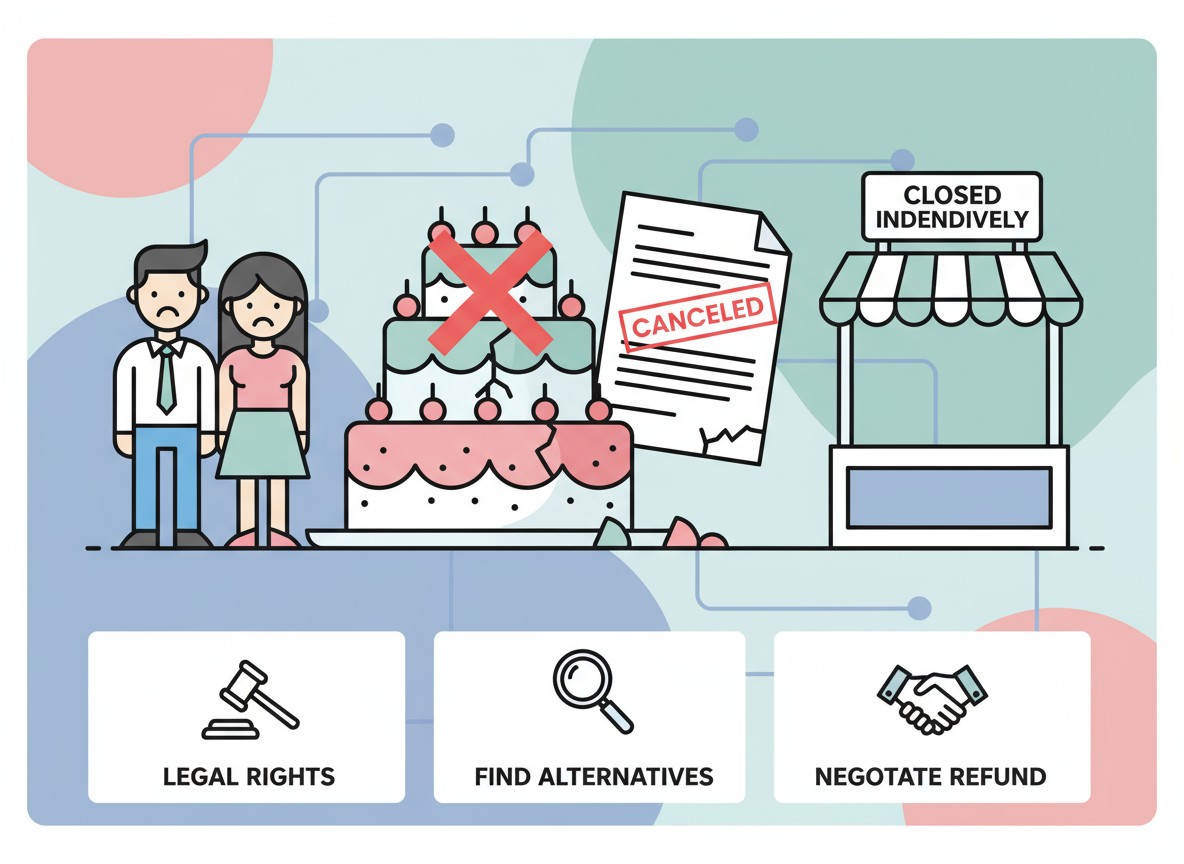
The email arrives six weeks before your wedding date: your photographer is canceling due to “unforeseen circumstances.” You’ve paid a $2,000 deposit, booked this vendor a year ago, and built your entire wedding timeline around their style and availability. Your stomach drops as you realize every photographer in your area is already booked for peak wedding season. This nightmare scenario happens to thousands of couples annually—vendors cancel due to illness, business closures, double-bookings, personal emergencies, or simply deciding they don’t want to honor the contract anymore.
Wedding vendor cancellations trigger cascading crises beyond just losing the service itself. Deposits disappear, timelines collapse, and couples face the challenge of finding replacement vendors when availability is extremely limited. The emotional toll compounds financial stress—anger, betrayal, and panic over whether your wedding can even happen as planned. Many couples don’t know their legal rights or practical options when vendors breach contracts, leading to acceptance of unacceptable outcomes or aggressive legal action when simpler solutions exist.
This guide examines wedding vendor cancellation from legal, practical, and strategic perspectives. You’ll learn what rights contracts actually provide, how to recover deposits, strategies for finding last-minute replacement vendors, when legal action makes sense, and how to protect yourself from cancellations in the first place. The information comes from contract attorneys specializing in wedding law, couples who successfully navigated vendor cancellations, and wedding industry professionals who’ve witnessed every type of cancellation scenario. Vendor cancellations are devastating but rarely insurmountable—knowing your options prevents bad situations from becoming worse through panic or inaction.
Your Contract Determines Everything
When vendors cancel, your contract dictates what happens next—what refunds you receive, what damages you can claim, and what legal recourse exists. Unfortunately, most couples sign vendor contracts without reading them carefully or negotiating unfavorable terms. Wedding contracts typically favor vendors heavily, including broad force majeure clauses allowing cancellation with minimal penalties, non-refundable deposit provisions, and limited liability caps that prevent recovering your full losses even when vendors clearly breach agreements.
Immediately locate your contract with the canceling vendor and read every provision carefully. Focus particularly on sections titled “Cancellation,” “Termination,” “Force Majeure,” “Refunds,” “Liability,” and “Damages.” These sections explain what the vendor must do if they cancel, what refunds they owe you, and what additional compensation you might claim. Many contracts specify that vendors who cancel must refund all payments immediately. Others allow vendors to keep deposits even when they cancel. Some contracts include penalty clauses requiring vendors to pay liquidated damages if they breach the agreement.
Force majeure clauses excuse vendors from performance when unforeseeable circumstances beyond their control make fulfilling the contract impossible—natural disasters, pandemics, government restrictions, or similar events. However, many vendors interpret force majeure broadly to include situations that don’t actually qualify, like personal inconvenience, staffing problems, or better-paying opportunities. True force majeure events are rare and specific—a vendor claiming force majeure because they’re understaffed or decided to retire doesn’t have valid grounds unless the contract language is extremely broad.
What Your Contract Should Say (But Probably Doesn’t)
Ideal wedding contracts include mutual cancellation terms requiring vendors who cancel without force majeure justification to refund all payments plus pay liquidated damages equal to 25-50% of the contract value. They specify narrow force majeure definitions excluding ordinary business problems. They guarantee replacement vendor arrangements at the original vendor’s expense if cancellation occurs within 60 days of the wedding. They include mediation and arbitration clauses reducing legal costs for dispute resolution.
Most vendor contracts contain none of these protections. Vendors write contracts favoring themselves, allowing broad cancellation rights with minimal penalties while restricting your cancellation rights severely. This imbalance is why reading and negotiating contracts before signing is crucial—most vendors will modify terms when requested, but won’t volunteer better protections.
Immediate Actions in the First 48 Hours
Time is critical when vendors cancel—every day delayed reduces your options for finding replacements and recovering deposits. Your first action should be documenting everything about the cancellation. Save all emails, text messages, and correspondence from the vendor. Take screenshots of any social media posts or website changes indicating business closure or schedule changes. If the cancellation came verbally, immediately send a written email confirming what was said: “This confirms our phone conversation today where you informed me you’re canceling our wedding photography contract for [date]. Please respond confirming this cancellation and your refund timeline.”
Respond to the vendor in writing within 24 hours, acknowledging the cancellation and demanding full immediate refund of all payments. Reference your contract specifically: “Per Section 8.2 of our contract, vendor cancellation requires immediate full refund of all deposits and payments. I expect refund of $2,400 within 7 business days via check or electronic transfer to [account information].” Even if your contract doesn’t guarantee full refunds, demanding them establishes your position and creates documentation for potential legal action. Some vendors refund immediately to avoid disputes, even when contracts don’t require it.
Simultaneously begin searching for replacement vendors. Don’t wait for deposit refunds or legal resolution before booking alternatives—you might lose even more replacement options waiting. Contact every vendor in your area providing the canceled service, explain your situation honestly, and ask about availability. Many vendors maintain waiting lists or emergency availability for precisely these situations. Some charge premium rates for last-minute bookings, but having the service secured is worth premium pricing compared to going without photography, catering, or other essential vendors.
Notifying Your Wedding Planner and Other Vendors
If you’ve hired a wedding planner, notify them immediately about the cancellation. Professional planners maintain extensive vendor networks and often know replacement options unavailable to couples searching independently. Planners may also have leverage with the canceling vendor through professional relationships or industry associations. Some planners include vendor cancellation assistance as part of their services, handling all coordination and negotiation on your behalf.
Inform other vendors about the cancellation if it affects their services. If your caterer cancels, notify the venue since catering changes may impact setup, timing, or venue policies. If your photographer cancels, tell your videographer since they often coordinate closely. Other vendors may have replacement recommendations or know someone who can help. Wedding industry professionals tend to support each other and often go out of their way to help couples in crisis situations.
Different Cancellation Scenarios and Your Options
Vendor cancellations fall into several categories, each requiring different response strategies. Business closure represents the most challenging scenario—the company completely shuts down, often with no forwarding information or asset recovery possible. Owners may declare bankruptcy, making deposit recovery extremely difficult. In business closure situations, focus immediately on replacement vendors rather than spending energy on deposit recovery. You can pursue legal action later, but securing replacement services is urgent.
Personal emergencies like illness, injury, or family crises create legitimate force majeure situations where vendors genuinely cannot perform. Many vendors experiencing true emergencies will proactively help find replacements, offer partial refunds despite contract terms, or work with you cooperatively because they feel guilty about the situation. Approach these cancellations with empathy while still protecting your interests—understanding doesn’t mean accepting total financial loss, but you’ll likely achieve better outcomes through cooperation than confrontation.
Double-booking scenarios occur when vendors accidentally or deliberately book multiple events for the same date. This represents clear breach of contract with no force majeure justification. Vendors who double-book should face maximum consequences—full refunds plus damages for replacement costs exceeding the original contract. Some vendors try to offer substitutes like sending a different photographer or having another DJ cover the event. You’re not obligated to accept substitutes unless your contract specifically allows vendor substitution. If the substitute is clearly inferior to what you contracted for, reject it and demand full refunds plus damages.
The “Better Offer” Cancellation
Some vendors cancel lower-paying weddings when higher-paying opportunities arise, particularly photographers, venues, and bands who can earn significantly more from corporate events or celebrity clients. This represents flagrant breach of contract deserving maximum legal consequences. Vendors canceling for better offers typically avoid admitting the real reason, instead claiming vague “scheduling conflicts” or “personal reasons.” If you suspect this scenario, document any evidence you find—social media posts showing them working that date, website updates advertising availability, or information from other couples who booked them.
Vendors who cancel for better offers should receive immediate negative reviews on every platform, complaints filed with professional associations and business bureaus, and aggressive legal action for breach of contract. Don’t accept excuses or partial refunds. These vendors deliberately chose to harm you for profit and deserve full accountability. Your legal claim should include the full contract amount refunded plus all additional costs incurred finding replacement vendors at higher rates, plus potentially punitive damages if local law allows.
Real Story: Venue Cancels Three Weeks Out
Rachel and Tom booked a rustic barn venue for their 150-guest October wedding, paying $8,000 ($3,000 deposit, $5,000 final payment). Three weeks before the wedding, the venue owner called saying he’d decided to close the business and retire. He offered to refund their deposit but claimed the final payment was non-refundable per the contract. Panicked, they found an available hotel ballroom charging $12,000 for the same date.
Rachel immediately hired a contract attorney who sent a demand letter citing breach of contract and threatening litigation. The letter pointed out that non-refundable final payment clauses typically only apply to customer cancellations, not vendor breaches. The venue owner’s insurance company (discovered through public records) was copied on the letter. Within 48 hours, the venue owner agreed to refund the full $8,000 plus pay $3,000 toward the increased hotel costs. Total attorney fees: $850. Net recovery: $10,150. The quick legal action and insurance company notification made the difference between losing $5,000 and recovering everything plus damages.
Recovering Your Deposit and Payments
Deposit recovery begins with a formal written demand letter sent via certified mail with return receipt. Professional demand letters clearly state what you’re owed, cite specific contract provisions supporting your claim, set a deadline for response, and outline consequences for non-compliance. Many attorneys offer demand letter services for $200-$500, making professional representation affordable for most couples. Vendors take attorney-written demands more seriously than customer complaints.
If the vendor paid you via credit card, immediately contact your card issuer to dispute the charges. Credit card companies can reverse charges when vendors breach contracts or fail to deliver promised services. The chargeback process typically takes 30-60 days but often succeeds when supported by documentation showing vendor cancellation and breach. File disputes for all credit card payments, not just deposits. You can pursue chargebacks while simultaneously pursuing legal action through other channels.
Check if the vendor maintains business insurance or professional liability insurance. Many photographers, caterers, and other vendors carry policies specifically covering situations where they cannot fulfill contracted services. Insurance companies want to settle claims quickly to avoid litigation costs. Finding out the vendor’s insurance carrier (sometimes listed on their website or contracts) and filing a direct claim with the insurer can produce faster results than pursuing the vendor directly. Insurance companies also have deeper pockets than individual vendors, increasing your likelihood of full recovery.
Small Claims Court as a Strategic Option
Small claims court provides an accessible legal venue for recovering deposits and payments without hiring expensive attorneys. Most states allow claims up to $5,000-$10,000 in small claims court, covering typical wedding vendor deposits. Filing fees range from $30-$100, court procedures are simplified, and hearings typically occur within 60-90 days. You represent yourself, present your contract and documentation, and judges usually rule quickly on straightforward breach of contract cases.
Small claims court works particularly well for clear vendor breaches with solid documentation. Bring your signed contract, all correspondence with the vendor, proof of payments, and evidence of the cancellation. Organize documents chronologically and highlight relevant contract sections. Many vendors don’t appear for small claims hearings, resulting in default judgments in your favor. Even vendors who appear rarely have sophisticated legal defenses for obvious contract breaches. Winning a judgment and actually collecting money are different challenges, but judgments can be enforced through wage garnishment, bank levies, or property liens if vendors refuse to pay.
Finding Emergency Replacement Vendors
The vendor cancellation immediately creates a practical crisis separate from financial recovery—you need replacement services, often with limited time and options. Start by clearly identifying what you actually need. If your photographer cancels, you need someone competent to capture your wedding, but you may need to compromise on style, experience level, or portfolio quality. Redefine “acceptable” based on your new reality—the perfect vendor you originally booked isn’t available, so focus on finding the best available option rather than fixating on what you’ve lost.
Expand your search radius significantly. If local vendors are fully booked, look at neighboring cities or regions. Many photographers, DJs, bands, and other mobile vendors will travel for additional fees. A photographer from two hours away charging $500 travel fee might be your best option when all local photographers are booked. Similarly, consider vendors who are less established but available—newer photographers with smaller portfolios, up-and-coming caterers building their business, or DJs with fewer years of experience. These vendors often deliver excellent service at lower prices while providing the essential service you need.
Post in local wedding Facebook groups, wedding planning forums, and community boards explaining your situation. Fellow brides often know vendors with last-minute availability or can connect you with professionals in their networks. Wedding planning communities are remarkably supportive when couples face vendor crises, with members volunteering recommendations, making introductions, and sometimes even offering services themselves. Be specific about your date, location, budget, and what you’re seeking.
Creative Solutions for Specific Vendor Types
Photography cancellations might be solved through photography students at local colleges or universities who can shoot professionally for significantly reduced rates while building portfolios. Contact photography departments explaining your situation—professors often know talented students eager for real wedding experience. You might also hire two amateur photographers rather than one professional, ensuring comprehensive coverage through multiple perspectives even without professional-level expertise.
Catering cancellations open possibilities beyond traditional wedding caterers. High-end restaurants often cater private events even if they don’t advertise catering services. Barbecue restaurants, Italian eateries, and other local favorites may provide off-site catering for your date. Food trucks offer another alternative—multiple food trucks create varied cuisine options while handling catering for large groups. Many couples report food truck weddings becoming highlights that guests remembered more fondly than traditional catered meals.
Venue cancellations require the most creativity since alternative spaces may require permits, rentals, and coordination. Consider private estates or homes (yours, family members’, or friends’), public parks with pavilions, restaurant private rooms, brewery or winery event spaces, or even unusual venues like museums, aquariums, or historic buildings. Many venues don’t actively market wedding services but will accommodate events when directly contacted. Your backup venue may actually become a more memorable, personal setting than your original choice.
The Role of Wedding Insurance
Wedding insurance policies typically include vendor failure coverage, reimbursing couples when vendors go out of business, fail to show up, or otherwise breach contracts. Standard policies cover $1,000-$2,500 in vendor failure losses, with premium policies offering up to $5,000-$10,000 coverage. If you purchased wedding insurance before your vendor canceled, immediately file a claim with complete documentation—your contract, proof of payment, cancellation notice, and evidence of financial loss.
Wedding insurance generally costs $150-$600 depending on coverage levels and wedding size. Many couples skip this expense, considering it unnecessary until facing vendor cancellations, venue damage, or other covered crises. Insurance becomes particularly valuable for expensive weddings where vendor deposits total $5,000-$15,000—amounts too large to lose but too small to justify expensive litigation. Insurance companies handle recovery efforts on your behalf, pursuing vendors while reimbursing you relatively quickly.
If you didn’t purchase wedding insurance before the vendor canceled, you obviously cannot buy coverage retroactively for that cancellation. However, consider purchasing insurance immediately to protect against additional vendor failures. Once one vendor cancels, wedding planning stress increases and other vendors may become more likely to cancel as well, particularly if you’re experiencing broader issues like venue problems or date changes affecting multiple vendors. Insurance purchased now protects against future cancellations and other covered events occurring before your wedding.
When Legal Action Isn’t Worth It
Sometimes pursuing legal action costs more than you’d recover, even when vendors clearly breached contracts. If your deposit was under $500, small claims court may not be worth your time considering filing fees, lost work hours for court appearances, and energy spent on the case. Similarly, if the vendor declared bankruptcy, has no assets, or has permanently closed with no insurance coverage, legal action becomes effectively pointless—winning judgments against defunct businesses yields no actual recovery.
Focus your energy on finding replacement vendors and moving forward rather than futile legal battles over small amounts against judgment-proof defendants. Save documentation in case the vendor resurfaces under a new business name, but don’t let the legal battle consume time and attention you need for replanning your wedding. Sometimes accepting a loss and moving on is the smartest strategic choice.
Protecting Yourself From Future Cancellations
When booking replacement vendors or additional vendors for other services, apply lessons from your cancellation experience to prevent recurrence. Read contracts entirely before signing, focusing on cancellation, termination, and liability provisions. Negotiate contract modifications protecting your interests—request full refund guarantees if vendors cancel without force majeure justification, reasonable substitute provisions specifying acceptable replacements, and liquidated damages clauses penalizing vendor breaches.
Pay deposits with credit cards when possible, providing chargeback protection if vendors breach contracts. Avoid paying final balances until shortly before the wedding—many contracts demand final payment 30-90 days in advance, but you can often negotiate later payment schedules reducing your exposure to vendor cancellations. If vendors insist on early final payments, request they place funds in escrow until services are successfully delivered, protecting both parties’ interests.
Verify vendors maintain current business licenses, professional certifications, and insurance coverage. Ask for copies of insurance certificates and business licenses, confirming they’re current and legitimate. Check reviews carefully, particularly looking for patterns of cancellations, no-shows, or business reliability issues. Contact references directly rather than relying only on testimonials provided by vendors. Established vendors with long business histories and professional reputations are less likely to cancel than newer or less professional operations.
The Importance of Public Reviews and Warnings
After experiencing vendor cancellation, you have both a right and a responsibility to warn other couples through public reviews. Post detailed, factual reviews on Google, Yelp, WeddingWire, The Knot, Facebook, and any other platforms where couples research vendors. Stick to objective facts rather than emotional attacks—describe exactly what happened, when the vendor canceled, how they handled the situation, whether they refunded payments, and the financial and emotional impact on your wedding.
Factual negative reviews help other couples avoid the same vendor while also potentially motivating vendors to resolve situations more favorably. Many vendors facing public criticism will offer better settlements or refunds to get negative reviews removed or modified. Review platforms take wedding vendor reliability seriously and often investigate vendors receiving multiple cancellation complaints, potentially removing them from platforms entirely.
File complaints with professional associations relevant to the vendor type—the Professional Photographers of America, National Association of Catering and Events, American Disc Jockey Association, or similar organizations. These associations maintain ethical standards and may discipline or remove members who violate professional conduct through contract breaches. Also file complaints with your state’s Attorney General office, Better Business Bureau, and local consumer protection agencies. While these complaints rarely produce direct financial recovery, they create official records helping other consumers and potentially triggering regulatory action against repeat offenders.
Emotional Recovery From Vendor Betrayal
Vendor cancellations trigger genuine grief and betrayal beyond just financial or logistical problems. You trusted someone with a crucial element of your wedding, invested time building a relationship, made decisions based on their promises, and they violated that trust. Many couples report feeling personally attacked or targeted, even though vendor cancellations are usually business decisions unrelated to the couple themselves. Acknowledge these emotional reactions as valid rather than trying to suppress them because “it’s just business.”
Allow yourself time to process anger, disappointment, and stress before making major decisions about your wedding. Don’t immediately jump to postponing your wedding or making dramatic changes while in emotional crisis mode. Give yourself 48-72 hours to work through initial reactions, then evaluate options more rationally. Many solutions exist that aren’t apparent when you’re in panic mode immediately after receiving cancellation news. What feels like an unsolvable disaster on day one often becomes a manageable problem with workable solutions by day three.
Lean on your partner, family, friends, and wedding planner for emotional support during the crisis. Vendor cancellations test relationships and planning processes, but they also provide opportunities to demonstrate resilience and problem-solving abilities. Many couples report that successfully navigating vendor cancellations together actually strengthened their relationships—proving they can handle crises as a team. Your replacement vendor may become a better fit than your original choice, or the alternative solutions you develop may create more memorable experiences than originally planned.
When to Consider Postponing Your Wedding
Most vendor cancellations don’t require postponing your wedding—replacement vendors can be found, alternative solutions implemented, or services modified to work without that vendor. However, certain situations do justify considering postponement. If your venue cancels and absolutely no alternative spaces are available in your area, postponement may be necessary. If multiple vendors cancel simultaneously, suggesting broader issues with your date or vendors, postponement might be wise. If the canceled vendor was so central to your wedding vision that continuing without them feels wrong, postponement allows you to replan properly.
Before postponing, carefully evaluate all costs and complications. Postponement affects every vendor—some may allow free date changes while others charge rescheduling fees or refuse changes entirely, requiring you to cancel and rebook at higher rates. Guest travel arrangements, time-off requests, and coordination become even more complex when dates change. Family members and friends may not be available for new dates. Postponement solves the immediate vendor crisis but creates its own cascade of complications that may be worse than finding immediate solutions.
If you do postpone, negotiate with all vendors about date changes before formally announcing the postponement. Get written confirmation that vendors will honor your contract for new dates without additional fees or changes. Secure your new venue and essential vendors before committing to postponement—ensure replacement options actually exist for your new timeframe. Some couples postpone only to discover vendors are equally booked for alternative dates, or that postponement costs exceed simply replanning around the cancellation.
Vendor Cancellation Action Checklist
☐ Document everything—save all emails, texts, and communications about the cancellation
☐ Immediately review your contract focusing on cancellation and refund provisions
☐ Send written demand for full refund within 24 hours via email and certified mail
☐ Begin searching for replacement vendors immediately—don’t wait for refunds
☐ Notify your wedding planner about the cancellation for assistance
☐ File credit card disputes for all payments made to the canceling vendor
☐ Research the vendor’s insurance coverage and file claims if applicable
☐ File wedding insurance claims if you have vendor failure coverage
☐ Expand your replacement vendor search radius and consider less traditional options
☐ Post in wedding forums and Facebook groups requesting vendor recommendations
☐ Send formal demand letter via attorney if vendor refuses refund
☐ File small claims court case if amounts are within jurisdictional limits
☐ Post factual reviews on Google, Yelp, WeddingWire, and The Knot
☐ File complaints with professional associations and Better Business Bureau
☐ Reread contracts carefully when booking replacement or additional vendors
☐ Take 48-72 hours to process emotions before making postponement decisions
☐ Consider purchasing wedding insurance if you haven’t already
Vendor cancellations rank among the most stressful wedding planning challenges couples face, combining financial loss, logistical nightmares, and emotional betrayal into a perfect storm of crisis. Yet thousands of couples successfully navigate vendor cancellations every year, finding creative solutions, recovering deposits through strategic action, and ultimately creating beautiful weddings despite the setbacks. Your rights depend entirely on contract terms you probably didn’t read carefully when originally booking—but even weak contracts provide leverage when you understand how to use them. Immediate action separates couples who minimize damage from those who compound problems through panic or inaction. Finding replacement vendors requires flexibility, creativity, and willingness to compromise on your original vision, but acceptable alternatives almost always exist when you expand your thinking beyond traditional options. Legal recovery through demand letters, credit card disputes, insurance claims, or small claims court succeeds more often than couples expect, particularly when vendors breach obvious contract obligations. The cancellation that feels catastrophic today often becomes a minor detail when looking back at your wedding from years in the future—a temporary crisis overcome through resilience, problem-solving, and determination to celebrate your marriage regardless of vendor failures. Your wedding will happen, and it will be beautiful, and you’ll have proven to yourselves and each other that you can face adversity together and emerge stronger on the other side.
Leave a Reply