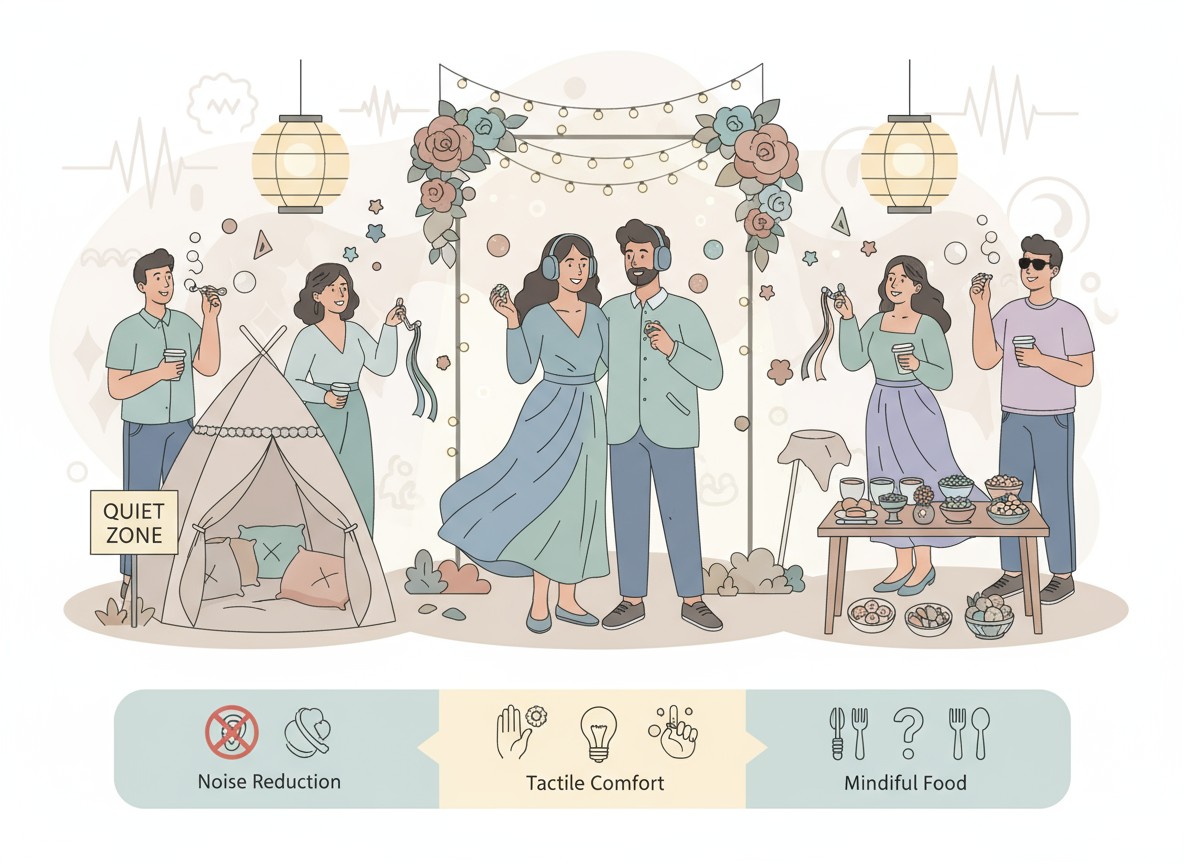
The wedding venue tour seems perfect until fluorescent lights trigger an immediate headache. The caterer offers exquisite menus featuring textures you can’t tolerate. Your photographer wants constant posing and attention during a day when executive function will already be maxed out. The DJ plays at volumes that feel physically painful. Traditional wedding planning operates on neurotypical assumptions—that everyone processes sensory input similarly, handles social demands equally well, and manages complex planning without executive function challenges. For neurodivergent individuals, these assumptions create weddings that feel more like endurance tests than celebrations.
Neurodivergence encompasses autism spectrum conditions, ADHD, sensory processing disorders, dyspraxia, dyslexia, and various other neurological differences affecting how individuals process information, stimuli, and social situations. Approximately 15-20% of the population is neurodivergent, yet the wedding industry rarely acknowledges their specific needs. Venues blast music at overwhelming volumes. Ceremonies require sustained attention and stillness. Receptions involve constant social demands, unpredictable schedules, and sensory chaos from competing sounds, lights, smells, and crowds. For many neurodivergent people, these conditions create genuine distress rather than joyful celebration.
This guide addresses wedding planning from a neurodivergent perspective, focusing on sensory accommodation, executive function support, social demand management, and creating environments where neurodivergent couples and guests can genuinely enjoy celebrations. The strategies here come from neurodivergent individuals who’ve planned weddings, occupational therapists specializing in sensory processing, autism advocates, and ADHD coaches experienced in event planning. Your wedding can be beautiful, meaningful, and genuinely comfortable—but achieving this requires intentional planning around neurological needs rather than forcing yourself to mask through an event designed for neurotypical nervous systems.
Sensory Audit: Identifying Your Specific Triggers
Before planning any wedding elements, conduct a thorough sensory audit identifying your specific triggers and comfort zones. Not all neurodivergent people experience the same sensory issues—some are sensitive to sound but unbothered by visual stimulation, while others struggle with tactile input but handle auditory environments well. Your sensory profile determines which wedding elements need modification and which can follow traditional formats. Create a detailed list organizing sensory inputs by category: auditory, visual, tactile, olfactory, gustatory, vestibular, and proprioceptive.
For each sensory category, identify triggers that cause distress, stimuli you find neutral, and inputs you actually enjoy or find regulating. For auditory processing, note whether you’re sensitive to volume, certain frequencies, background noise, or unexpected sounds. Visual triggers might include bright lights, fluorescent lighting, patterns, or visual clutter. Tactile issues often involve specific fabric textures, tags, tight clothing, or physical touch from others. Understanding your sensory profile allows you to design accommodations addressing actual needs rather than generic “sensory-friendly” modifications that may not help you specifically.
If you’re partnered with a neurotypical person, help them understand your sensory needs through concrete examples rather than abstract descriptions. “Loud music at weddings” becomes more understandable when explained as “the bass vibrations feel like physical pain in my chest and the volume makes it impossible to process conversations, leaving me completely overwhelmed within 30 minutes.” Specificity helps partners and family members grasp why certain accommodations aren’t optional preferences but genuine neurological necessities.
Common Sensory Triggers at Traditional Weddings
Auditory: Live bands or DJs at high volumes, multiple conversations creating wall of noise, sudden loud sounds like clapping or music changes, microphone feedback, bass-heavy music creating physical vibrations
Visual: Flashing lights, strobe effects, busy patterns on decorations or tablecloths, fluorescent venue lighting, bright camera flashes, visually cluttered spaces
Tactile: Scratchy formal wear fabrics, tight wedding attire, unwanted hugs or touches from guests, corsages or boutonnieres pinned to clothing, restrictive shoes
Olfactory: Overwhelming floral arrangements, mixed perfumes and colognes from guests, food smells competing with each other, scented candles, cleaning product odors in venues
Venue Selection With Sensory Considerations
Venue choice dramatically impacts sensory experience throughout your wedding. When touring potential venues, visit during times similar to when your event would occur—noise levels, lighting, and crowd density vary significantly between daytime and evening, weekdays and weekends. Bring noise-canceling headphones or sunglasses if needed during tours, and don’t let pressure to appear “normal” prevent you from testing your actual comfort level. A venue that seems fine during a brief afternoon tour might become unbearable during a four-hour evening reception with 150 guests.
Prioritize venues with separate spaces allowing retreat from sensory intensity. Indoor-outdoor venues provide escape to quieter outdoor areas when inside becomes overwhelming. Multi-room facilities let you designate one space as a quiet zone away from music and crowds. Venues with natural lighting through large windows reduce need for harsh artificial lighting. Smaller, more intimate venues limit crowd size and resulting sensory demands. Gardens, private estates, and historic buildings often offer better sensory environments than banquet halls or hotel ballrooms with industrial acoustics and fluorescent lighting.
Ask venues about lighting control options. Can you dim lights, turn off certain fixtures, or use only natural light? Fluorescent lighting triggers migraines and sensory distress for many neurodivergent individuals, making it crucial to verify venues allow alternative lighting. Similarly, assess acoustic properties—high ceilings and hard surfaces amplify sound while carpeted spaces with sound-absorbing materials reduce echo and noise. Venues designed for music performances often have worse acoustics for conversation than those designed as dining spaces.
Creating Designated Quiet Spaces
Negotiate with venues to designate a specific room or area as a quiet retreat space available throughout your event. This space should be clearly marked, have comfortable seating, dim lighting, and most importantly—be far enough from music and crowds that it provides genuine sensory relief. Stock the quiet space with items that help you regulate: fidget toys, noise-canceling headphones, weighted blankets, dim lamps, water, snacks, and anything else that helps you decompress. Some couples create “sensory stations” with various regulatory tools so guests can use whatever helps them personally.
Communicate clearly about the quiet space through signage and your wedding program. “The library room is available throughout the evening as a quiet space for anyone needing a break from sensory stimulation. Please help us keep this space calm by speaking quietly and limiting phone use.” Explicit permission to use the quiet space reduces guilt or embarrassment guests might feel about “abandoning” the celebration. Many guests will use and appreciate the quiet space even if they’re not neurodivergent—parents with babies, introverts, people with migraines, or anyone needing respite from party intensity.
Ceremony Modifications for Sensory Comfort
Traditional ceremonies require sustained attention, stillness, and sensory tolerance that can be challenging for neurodivergent individuals. Shorten your ceremony to 15-20 minutes maximum rather than the typical 30-45 minutes. Guests won’t complain about brief ceremonies, and shorter duration prevents sensory overload for you and neurodivergent guests. Every element doesn’t need inclusion—select only the most meaningful components and eliminate filler content like lengthy readings or extended musical interludes that serve no purpose except tradition.
Consider allowing movement during ceremonies rather than requiring everyone to stand or sit motionless. Some couples explicitly tell guests: “Please feel free to shift positions, stretch, or step outside briefly if you need to move. We want everyone comfortable during our ceremony.” This permission benefits not just neurodivergent guests but also people with chronic pain, young children, and anyone who struggles with prolonged stillness. Ceremonies become more inclusive when you acknowledge that bodies have different needs.
Control auditory elements carefully. If you want music, keep volume moderate and avoid sudden loud notes or key changes. Communicate with your officiant about speaking at moderate pace with clear enunciation—racing through vows or speaking unclearly adds processing stress. Request that guests minimize extraneous noise like rustling programs, unwrapping candies, or whispering. Small outdoor ceremonies often provide better auditory environments than indoor venues where sound echoes and amplifies.
Reception Sound and Light Management
Reception sound levels create the single biggest sensory challenge at weddings. Traditional receptions feature music loud enough that conversation requires shouting, creating exhausting auditory environments. Have explicit conversations with DJs or bands about volume limits. “We need music at conversational volume—around 70 decibels maximum—throughout dinner, with slightly increased volume only during designated dancing periods. If guests must shout to talk, the music is too loud.” Many DJs resist these requests, claiming quiet music ruins the party atmosphere. Find vendors who respect your needs or hire acoustic musicians playing at moderate natural volumes.
Some couples skip traditional DJ services entirely, using curated playlists played through venue sound systems at controlled volumes. This approach eliminates the “DJ voice” making announcements and the gradual volume increases DJs use to “energize” crowds. Your phone or laptop connected to venue speakers provides complete volume control throughout the event. For couples who love music but can’t tolerate typical wedding volume, acoustic soloists or small jazz ensembles create sophisticated ambiance without overwhelming sound.
Lighting modifications are equally important. Replace harsh overhead lighting with softer options—string lights, uplighting, candles, or lamps create warm ambiance without fluorescent intensity. Avoid strobe effects, disco balls, or flashing lights entirely. Work with lighting designers to create layered lighting allowing different brightness zones—dimmer areas for those seeking reduced stimulation, slightly brighter spaces for those needing more light. Many neurodivergent people find candlelit receptions or string-lit outdoor evenings much more tolerable than brightly-lit ballrooms.
Real Story: Autistic Bride’s Sensory-Friendly Reception
Emma, diagnosed with autism at age 28, knew traditional wedding receptions would be unbearable. Instead of forcing herself to mask through a neurotypical event, she designed a completely different reception: a garden party during golden hour with string lights, acoustic guitar at conversational volume, small round tables for intimate conversations rather than long banquet tables, and a clear schedule posted visibly so guests knew what to expect and when.
Her “quiet lounge” featured bean bags, noise-canceling headphones, weighted lap pads, and fidget tools. She skipped traditional dancing, instead having a “lawn games hour” allowing movement without social performance demands. The buffet offered clearly labeled foods with ingredient lists for guests with food sensitivities. Her photographer received explicit instructions: “No surprise shots, I need a 30-second warning before each photo, and I’m taking scheduled photo breaks to decompress.” The result: Emma enjoyed her entire wedding without experiencing sensory overload, and multiple guests told her it was the most comfortable wedding they’d attended.
Clothing and Textile Considerations
Wedding attire creates significant tactile challenges for people with sensory sensitivities. Traditional formal wear features scratchy fabrics, tight fits, restrictive structures, and uncomfortable accessories. You’re not required to suffer through painful clothing on your wedding day simply because “that’s what wedding attire looks like.” Start searching early for formal wear in fabrics and styles that feel comfortable—soft cotton, smooth silk, stretchy blends, or whatever textures work for your nervous system. Many designers now create formal wear in sensory-friendly fabrics without sacrificing aesthetic appeal.
Remove all tags, modify anything that feels constricting, and prioritize comfort over tradition. Some brides choose simple slip dresses or soft separates instead of structured ball gowns. Grooms might wear soft dress shirts without ties, comfortable pants with elastic waistbands disguised under jackets, or completely custom suits in tolerable fabrics. Shoes represent another major challenge—break them in extensively or choose comfortable alternatives like dress sneakers, flats, or even go barefoot if your venue allows. Hours in uncomfortable footwear guarantees misery regardless of how beautiful the shoes appear.
Plan for outfit changes throughout the day. Many neurodivergent couples wear formal attire only for ceremony and photos, then change into comfortable clothes for the reception. This isn’t unconventional anymore—many neurotypical couples also prioritize comfort for reception hours. Have your comfortable outfit ready and easily accessible. Some people prepare multiple outfit options in case their first choice becomes intolerable partway through the event. Permission to change clothes reduces anxiety about being “trapped” in uncomfortable attire with no escape.
Accessory Modifications
Skip accessories that cause sensory distress even if they’re traditional. Veils can be heavy, restrict vision, and feel claustrophobic. Tiaras cause pressure headaches. Corsages and boutonnieres involve pins touching skin. Jewelry can be heavy, jangly, or irritating. Carry only essential items—rings obviously, but everything else is optional. Many neurodivergent people find that “less is more” applies perfectly to wedding accessories, reducing tactile input while creating cleaner aesthetic lines anyway.
For items you must wear—like wedding rings—ensure they’re properly sized and in materials that don’t irritate. Some people need hypoallergenic metals like platinum or titanium. Others can’t tolerate rings with textures, engravings, or stones that catch on things. Test-wear rings for extended periods before the wedding to verify comfort. There’s nothing wrong with choosing simple, smooth bands over elaborate designs if texture bothers you. Your ring needs to be something you’ll actually wear comfortably for decades, not just what looks impressive in photos.
Food and Beverage Planning for Sensory Needs
Food represents both gustatory and olfactory sensory input requiring careful planning. Many neurodivergent people have restricted diets due to sensory aversions to specific textures, flavors, or smells. Your wedding menu doesn’t need to accommodate every possible preference, but it should include options you can actually eat comfortably. Work with caterers to develop menus with variety in texture and flavor profiles—some dishes smooth, others with more texture; some mild, others more flavorful. This variety ensures everyone finds something tolerable.
Label foods clearly with complete ingredient lists. This helps people with food sensitivities identify safe options without having to ask servers repetitive questions. Buffet setups often work better than plated meals because guests can select what they’ll actually eat rather than being served predetermined plates potentially containing triggering ingredients. Consider “safe food” stations featuring simple, predictable items like plain bread, cheese, fresh fruit, and other foods with minimal seasoning for guests with restricted diets.
Control olfactory input by avoiding strongly scented foods that might trigger nausea or headaches. Heavy perfumed sauces, pungent cheeses, or intensely spiced dishes create olfactory environments some guests can’t tolerate. This doesn’t mean serving bland food—it means choosing flavors from seasoning rather than overwhelming smells. Also consider timing of food service carefully. Some neurodivergent people need regular food intake to maintain regulation and cannot skip meals or eat on delayed schedules without becoming dysregulated.
Timeline and Schedule Design for Executive Function
ADHD and autism often involve executive function challenges affecting planning, time management, and transitions between activities. Traditional wedding timelines with constant activity, little downtime, and frequent transitions create cognitive overload. Design your timeline with explicit breaks for rest and regulation. Instead of back-to-back photos, ceremony, cocktail hour, and reception with no gaps, build in 15-30 minute breaks where you can decompress privately. These breaks aren’t wasted time—they’re essential maintenance preventing complete overwhelm.
Create visual timelines clearly showing what happens when. Uncertainty about schedule and what comes next creates anxiety for many neurodivergent people. Detailed schedules reduce anxiety by making events predictable. Share this timeline with guests too—posting a clear schedule at your venue helps neurodivergent guests prepare mentally for transitions and plan their own energy management. “5:00 PM – Ceremony, 5:30 PM – Cocktail hour (quiet space available), 6:30 PM – Dinner, 7:30 PM – Dancing begins” gives concrete information reducing uncertainty.
Consider shorter overall event duration. Traditional six-hour receptions exhaust many neurodivergent people long before they end. A three to four-hour event allows you to actually enjoy the entire celebration rather than spending the last two hours in survival mode. Guests often appreciate shorter receptions too—many people feel obligated to stay for full durations even when tired. Shorter events let everyone leave feeling positive rather than exhausted and overwhelmed.
Warning Signs of Sensory Overload
Recognize your personal warning signs that sensory overload is approaching: difficulty processing speech even when clearly audible, increased irritability or emotional responses, physical symptoms like headaches or nausea, overwhelming urge to escape the environment, reduced ability to make decisions, or feeling disconnected from your body.
Create a plan for when you notice these signs—a prearranged signal to your partner or trusted friend that you need immediate retreat to the quiet space, permission to leave your own reception early if necessary, and acceptance that taking care of your nervous system is more important than fulfilling every traditional wedding obligation. Some couples designate a trusted friend as a “sensory guardian” who monitors for overload signs and intervenes when needed.
Communication Strategies for Neurodivergent Needs
Discussing neurodivergent needs with family, vendors, and guests requires balancing honesty about your requirements with managing others’ potential misunderstanding or dismissiveness. Some people won’t understand why you need accommodations or will minimize your needs as “preferences” rather than neurological necessities. Practice scripts for explaining your needs clearly: “I have sensory processing challenges that make loud environments physically painful. We need music at conversation volume” is more effective than vague statements about “preferring quiet.”
Disclose to vendors as needed to get proper accommodations. Your photographer needs to know you require structured photo sessions with clear instructions and scheduled breaks, not spontaneous candid shooting throughout the day. Your caterer needs ingredient information for safe food choices. Your venue coordinator needs to understand why lighting control is non-negotiable. Frame these needs professionally: “To ensure we can fully enjoy our wedding, we require these specific accommodations.” Most vendors will respond professionally when you present requirements as firm needs rather than tentative requests.
You’re not obligated to disclose your specific diagnosis if you’re uncomfortable doing so. Many vendors and family members respond better to concrete needs (“I need the music at conversation volume because loud sounds cause migraines”) than to diagnostic labels that might trigger stereotypes or misunderstanding. Share whatever information produces the results you need while protecting your privacy and emotional energy from explaining your neurological differences to everyone.
Social Demands and Interaction Management
Weddings involve intense social demands—constant interaction, performing expected emotional displays, small talk with distant relatives, and being center of attention for hours. These demands exhaust neurodivergent people even without sensory challenges. Design your wedding to reduce social pressure while maintaining meaningful connection. Smaller guest lists dramatically reduce social demands—50 guests require far less social energy than 200. Everyone at a small wedding can be someone you genuinely want to spend time with rather than distant acquaintances you feel obligated to invite.
Skip receiving lines or grand entrances if they feel performative and draining. Visit tables briefly during dinner but don’t feel obligated for lengthy conversations at each one. Some couples create “conversation stations” where guests come to them in a quiet lounge setting rather than the couple circulating through loud reception spaces. This reduces both social and sensory demands by providing controlled interaction environments. Your guests will understand if you explain: “We’re available in the lounge area for anyone who wants to chat in a quieter setting.”
Give yourself explicit permission to take social breaks. Disappearing for 15 minutes to decompress isn’t rude—it’s necessary nervous system maintenance. Some couples schedule these breaks into their timeline: “5:45-6:00 PM – Private time for the couple.” Putting it on the schedule normalizes the break and prevents guests from searching for you. Your wedding day doesn’t require constant availability and performance. Preserving your regulation allows you to actually enjoy the celebration rather than enduring it.
Photography and Videography Accommodations
Traditional wedding photography involves hours of posing, constant photographer attention, surprise candid shots, and bright flashes—all potentially triggering for neurodivergent people. Interview photographers specifically about their willingness to work within your needs. Explain that you need structured photo sessions with clear communication about what’s happening, advance warning before shots, minimal posing time, and frequent breaks. Some photographers naturally work this way while others thrive on spontaneous shooting styles incompatible with your needs.
Consider limiting photography to specific timeframes rather than all-day coverage. Perhaps hire a photographer for ceremony and one hour of formal portraits, then use guests’ phones or disposable cameras for reception candids. This reduces the feeling of constant surveillance while still capturing important moments. Some neurodivergent couples skip professional photography entirely, instead asking a talented friend to take photos casually or using a documentary-style photographer who captures moments without requiring performance.
Discuss flash photography explicitly. Bright flashes can trigger migraines, disorientation, or sensory overload. Request that photographers use only natural light or continuous lighting when possible. Modern cameras handle low-light situations well enough that flashes are less necessary than previously. Videography creates similar challenges—bright lights, being followed constantly, and microphones capturing every sound. If video feels overwhelming, skip it or use stationary cameras capturing key moments without requiring your constant awareness of being filmed.
Alternative Wedding Formats for Maximum Comfort
Traditional wedding formats aren’t mandatory. Some neurodivergent couples discover that completely different celebration styles suit their needs better. Micro-weddings with under 20 guests eliminate most sensory and social demands while maintaining celebration intimacy. Elopements with just the couple and an officiant remove all guest-related stress. Courthouse ceremonies followed by small dinners provide legal marriage without sensory chaos. Each format has validity—the “right” wedding is whatever allows you to genuinely celebrate rather than endure.
Some couples hold multiple small celebrations instead of one large event—perhaps an intimate ceremony with immediate family, followed by separate small gatherings with different friend groups. This approach spreads social demands across multiple shorter events rather than concentrating everything into one overwhelming day. Each gathering can be low-key, brief, and sensory-friendly in ways large weddings cannot achieve. Friends and family generally prefer small intimate gatherings over being one of hundreds at a massive reception anyway.
Non-traditional celebration formats reduce pressure from expectations about what weddings “should” look like. A backyard barbecue, casual brunch, hiking adventure, or game night can celebrate your marriage as validly as formal receptions. These informal formats often allow better conversation, genuine connection, and comfortable environments than trying to conform to traditional wedding templates designed for neurotypical sensory systems and social preferences. Your wedding should reflect who you actually are rather than performing who you think you’re supposed to be.
Accommodating Neurodivergent Guests
Even if you’re neurotypical, accommodating neurodivergent guests makes your wedding more inclusive and comfortable for a significant portion of attendees. Many accommodations that help neurodivergent guests benefit everyone—moderate music volumes improve conversation for all ages, clear schedules reduce uncertainty, comfortable seating helps people with various physical needs, and good lighting prevents eyestrain for anyone. Creating sensory-friendly environments doesn’t require sacrifice or compromise—it creates better experiences for everyone.
Include sensory accommodation information in your wedding website or invitations: “We’ve created a quiet space for anyone needing a break from sensory stimulation. Noise-reducing headphones and fidget tools are available. Please feel free to take breaks as needed—we want everyone comfortable celebrating with us.” This explicit permission helps neurodivergent guests feel welcome rather than anxious about whether their needs can be met. Some couples include sensory information in their RSVP forms, asking guests to note any specific accommodations needed.
Train your wedding party and close family members about sensory considerations. Let them know that some guests may need to leave periodically, might not make eye contact during conversations, could need specific food accommodations, or may engage differently with social activities. This preparation prevents well-meaning but problematic responses like dragging reluctant guests onto dance floors, questioning why someone is “hiding” in the quiet space, or making guests feel guilty for not participating in every activity. Educated allies help create genuinely inclusive environments where everyone can celebrate comfortably.
Neurodivergent-Friendly Wedding Checklist
☐ Complete personal sensory audit identifying specific triggers and comfort zones
☐ Tour venues during similar times to your event, testing actual sensory environment
☐ Secure venue with separate quiet space away from music and crowds
☐ Set firm volume limits with musicians/DJs—get commitments in writing
☐ Arrange for adjustable lighting—avoid fluorescents and strobe effects
☐ Find formal wear in comfortable fabrics—prioritize comfort over tradition
☐ Plan menu with variety in textures and flavors, clear ingredient labeling
☐ Create detailed visual timeline with built-in regulation breaks
☐ Keep ceremony short (15-20 minutes) with permission for movement
☐ Interview photographers about structured shooting and advance communication
☐ Stock quiet space with regulatory tools—headphones, fidgets, weighted items
☐ Consider shorter overall event duration (3-4 hours vs. 6+ hours)
☐ Communicate accommodation information to guests via website/invitations
☐ Designate a trusted “sensory guardian” to monitor for overload signs
☐ Give yourself explicit permission to take breaks and leave early if needed
☐ Discuss vendor needs clearly—frame as requirements, not preferences
Neurodivergent-friendly wedding planning requires intentionality, creativity, and willingness to question traditional assumptions about what weddings must include. The wedding industry’s neurotypical defaults—loud music, bright lights, constant social performance, restrictive formal wear, and sensory chaos—serve many people well but create genuine suffering for others. Your wedding exists to celebrate your relationship and commitment, not to perform conformity to expectations designed for different nervous systems than yours. Every modification you make to accommodate your neurodivergent needs creates a more comfortable, inclusive environment not just for yourself but for the significant percentage of guests who also struggle with sensory overload, social demands, and executive function challenges. The quiet space you create will be used and appreciated. The moderate music volumes will improve conversation for everyone. The clear schedules will reduce anxiety across your guest list. Your sensory-friendly wedding isn’t a compromise or lesser-than version of “real” weddings—it’s an authentic celebration designed around the reality of how you and many others actually experience the world. Neurotypical weddings aren’t inherently superior to neurodivergent-accommodating celebrations—they’re just different approaches serving different needs. By honoring your neurological reality rather than masking it, you create weddings that are genuinely joyful celebrations rather than endurance tests survived through sheer willpower. You deserve a wedding day where you actually feel present, comfortable, and able to celebrate rather than spending hours in sensory survival mode counting down until you can escape. That experience is absolutely achievable through thoughtful planning, clear communication, and refusing to sacrifice your well-being for traditions that don’t serve you.
Leave a Reply